When the new school year starts, many parents and caregivers think about back-to-school shopping, class schedules, extracurricular activities, and making sure their child is ready for another year. However, it’s also an important time to talk about healthy relationships.
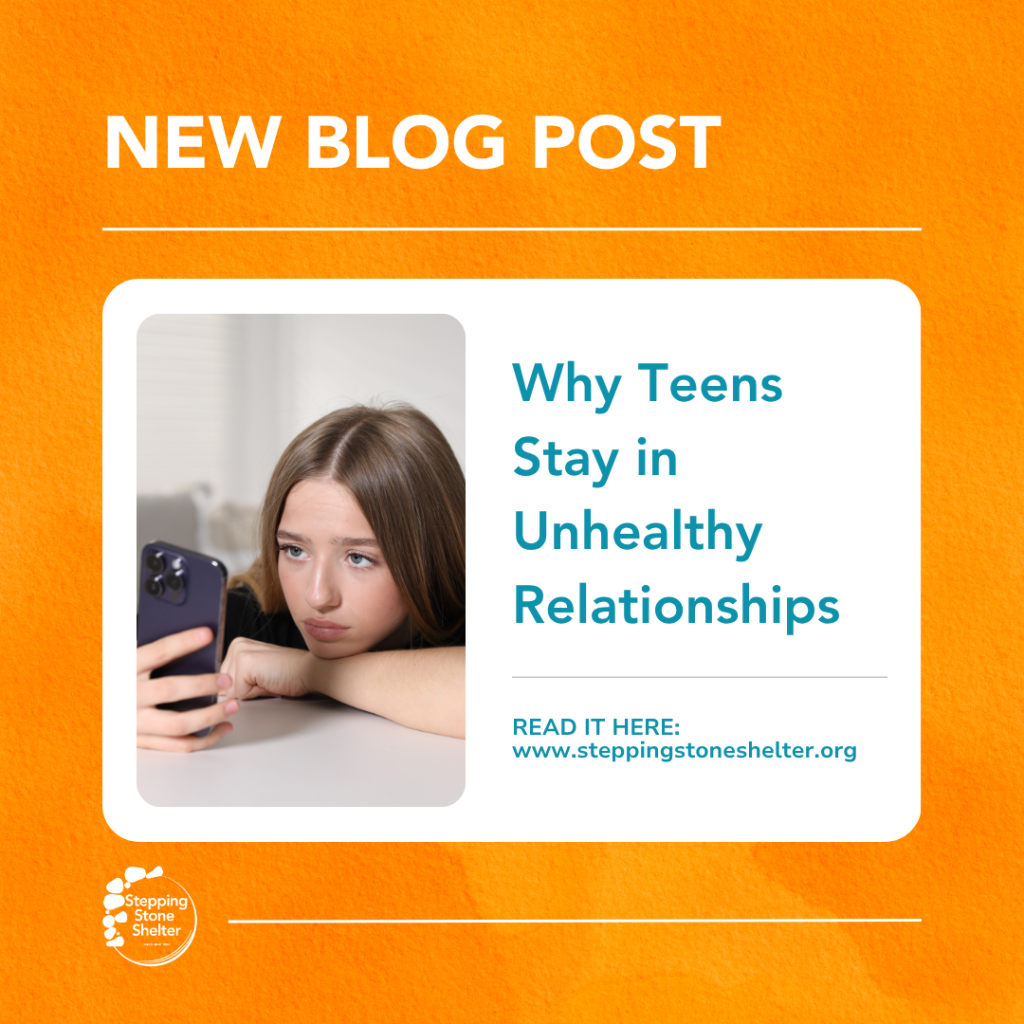
When someone is experiencing abuse, it can be hard to understand why they don’t ‘just leave’. Teen dating violence is more common than most people realize, and just like adults may struggle to leave abusive relationships, teens face unique challenges that make it difficult to recognize unhealthy behavior and even harder to walk away.
Lack Of Experience
For many teens, this may be their first relationship. Without previous relationships to compare it to, controlling or manipulative behaviors can be hard to recognize or understand. They may mistake possessiveness for love if a partner is constantly texting, demanding passwords, or insisting on spending every free moment together. Teens may not recognize these behaviors as early warning signs of abuse because they have limited relationship experience.
Manipulation Can Make Them Question Reality
Teens may experience emotional abuse in a relationship. One tactic used by abusers is DARVO, or:
- Deny the abusive behavior
- Attack the person who confronts it
- Reverse Victim and Offender, making themselves appear to be the one who has been hurt.
If a teen confronts their partner about an abusive behavior, the abuser may deny it happened, accuse the other, and then claim they are actually the victim. This tactic leaves survivors questioning their own reality, memories, feelings, and judgment. They might even wonder if the abuse is their fault, or if they are overreacting.
Low Self-Esteem
Abusive partners often target a survivor’s insecurities, criticizing their appearance, intelligence, friendships, or interests. They may use phrases such as:
- “No one else will love you.”
- “You’re lucky you have me.”
- “You’ll never find someone else who will date you.”
Hearing this repeatedly can slowly erode a teen’s confidence, and eventually they may begin to believe it. They may even think they don’t deserve better or that the relationship is the best they can hope for. When someone has low self-esteem, leaving can feel impossible.
They’re Afraid Of Being Alone
Relationships are often connected to friendships, social life, and more for teenagers. They may believe that ending their relationship can mean losing friendships, social status, or facing gossip at school. An abusive partner may also encourage isolation by creating conflict with family members or discouraging friendships. Then, the abusive relationship starts to feel like their only source of support as they become more isolated.
Media Can Normalize Unhealthy Behavior
With social media, technology, TV shows, and movies, relationships are constantly put on display, whether they’re healthy or unhealthy. Media can sometimes blur the line between controlling, possessive behavior and what a normal relationship looks like.
Jealousy is portrayed as romantic, constant communication as proof of love, and dramatic arguments followed by grand gestures are seen as signs of passion. It becomes harder for young people to recognize the warning signs in their own relationships when unhealthy behaviors are repeatedly presented as entertaining, romantic, or funny.
They’re Afraid
Leaving an abusive relationship is rarely the safest or easiest option. Teens might fear retaliation, harassment, threats, public embarrassment, or rumors spreading through school or social media. Partners may even threaten self-harm, share private photos, damage their reputation, or become physically violent. These fears are very real, and a teen’s safety should always come first. Leaving an abusive relationship often requires support from trusted adults.
How To Offer Support For Your Teen
Teens stay in unhealthy relationships for many of the same reasons adults do: fear, hope, love, uncertainty, and a belief that things might change. Instead of judging them, we need to offer a safe space for teens. As students head back to school this year, let’s help make healthy relationships part of the conversation.
Join us for our next Community Conversation on Teen Dating Violence on Thursday, August 6th, at 6:00 p.m. at HealthLinc in Michigan City. This free event offers parents, caregivers, educators, and community members valuable tools to help teens build healthy relationships, recognize unhealthy behaviors, and create a future where every young person knows they deserve respect. Registration is required. Register here.