Leaving an abusive relationship is a significant step, but it isn’t the end of the journey. For many survivors, finding safety is only the beginning of rebuilding a life that may have been disrupted by fear, control, financial abuse, isolation, and trauma.
At Stepping Stone Shelter, support isn’t limited to the time someone spends inside emergency shelter. The path forward can look different for every survivor, and having continued access to advocacy, resources, housing, and support can make a meaningful difference along the way.
Healing Doesn’t Happen Overnight
Domestic violence is about power and control within an intimate relationship, and it can take many forms, including physical, sexual, emotional, and financial abuse. Stepping Stone Shelter recognizes that domestic violence can affect anyone, regardless of age, gender, sexual orientation, race, religion, education, or socioeconomic background.
When someone leaves an abusive relationship, they may still be navigating legal matters, establishing routines for their children, or learning what healthy relationships and boundaries look like. This is why healing cannot be measured simply by the day someone leaves the shelter. Safety is an important milestone, but rebuilding a sense of independence, confidence, and stability takes time.
Support Can Continue Outside Of Shelter
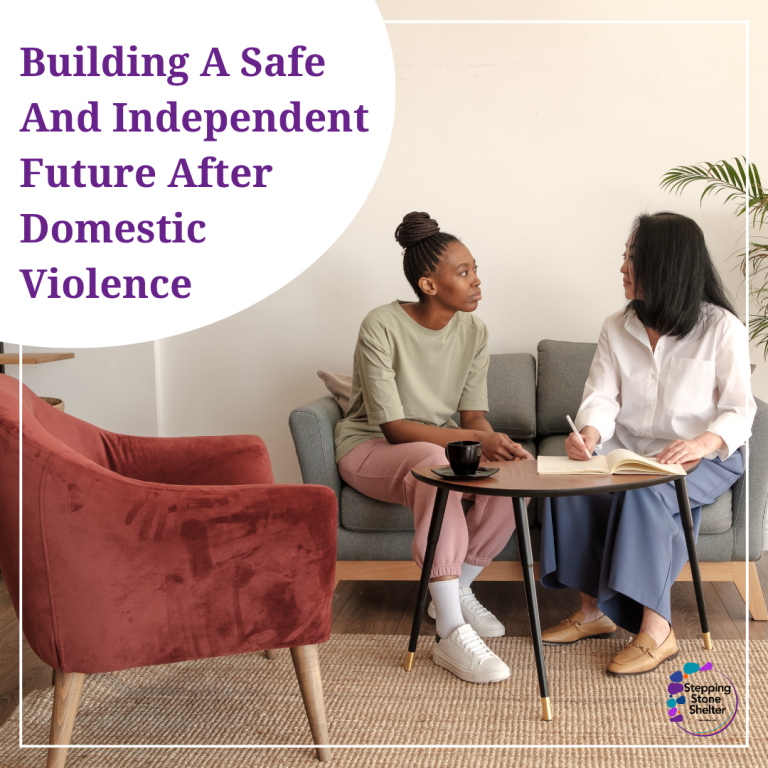
Stepping Stone Shelter provides more than emergency shelter. Our Domestic Violence Program offers one-on-one support to victims and survivors both in and out of shelter. Advocates can help with safety planning, basic needs, legal-system navigation, protective orders, domestic violence education, counseling, parenting support, life skills, employment and education goals, budgeting, self-care, and identifying options and resources.
Stepping Stone Shelter also offers non-residential advocacy services for people who may not need to stay in the shelter. These services are free and confidential and can be provided in the county where a client lives. This matters because asking for help doesn’t have to mean someone is entering a shelter. A survivor may need support while remaining in their own home, after leaving an abusive relationship, while navigating the legal system, or while working toward greater independence.
The Bridge: A Next Step Toward Independence
For survivors who have completed the emergency shelter program but still need additional support, Stepping Stone Shelter offers the Bridge Transitional Housing Program. The Bridge is a 15-unit self-sufficiency program consisting of fully furnished one-, two-, and three-bedroom apartments.
The program is provided at no cost to clients who qualify after completing the emergency shelter program. During their time in emergency shelter, clients receive assessment, case management, and goal planning. If a client is meeting their goals but still needs additional support, the Bridge can provide a next step in their healing journey.
Transitional housing can provide something important: time. Time to continue working toward goals, establish stability, and make plans for the future without having to figure everything out at once.
Healing Looks Different For Everyone
There’s no single timeline for recovering after domestic violence. One survivor may be focused on finding employment while another may be working toward independent housing. Survivors may need counseling, parenting support, legal advocacy, or a safe person who will listen without judgment.
We emphasize the importance of making survivors feel supported, regardless of the journey they choose or the decisions they make. This approach is important because survivors deserve to have their choices respected. Leaving an abusive relationship is not a single decision that suddenly makes everything easier, but a series of steps, and every step towards safety and independence matters.
Support At Stepping Stone Shelter
When we talk about domestic violence services, it is important to remember that shelter is one part of a much larger process. A safe place to stay can be life-changing, but survivors may need continued resources and encouragement as they rebuild. This support can continue through advocacy, counseling, life-skills assistance, legal resources, non-residential services, and transitional housing. The goal isn’t just to provide emergency shelter, but to support survivors as they work toward safety, stability, independence, and a future of their choosing.
If you or someone you know needs support, Stepping Stone Shelter’s 24-hour crisis line is available at 219-879-4615. Services are confidential, and you don’t have to be ready to make every decision before reaching out.