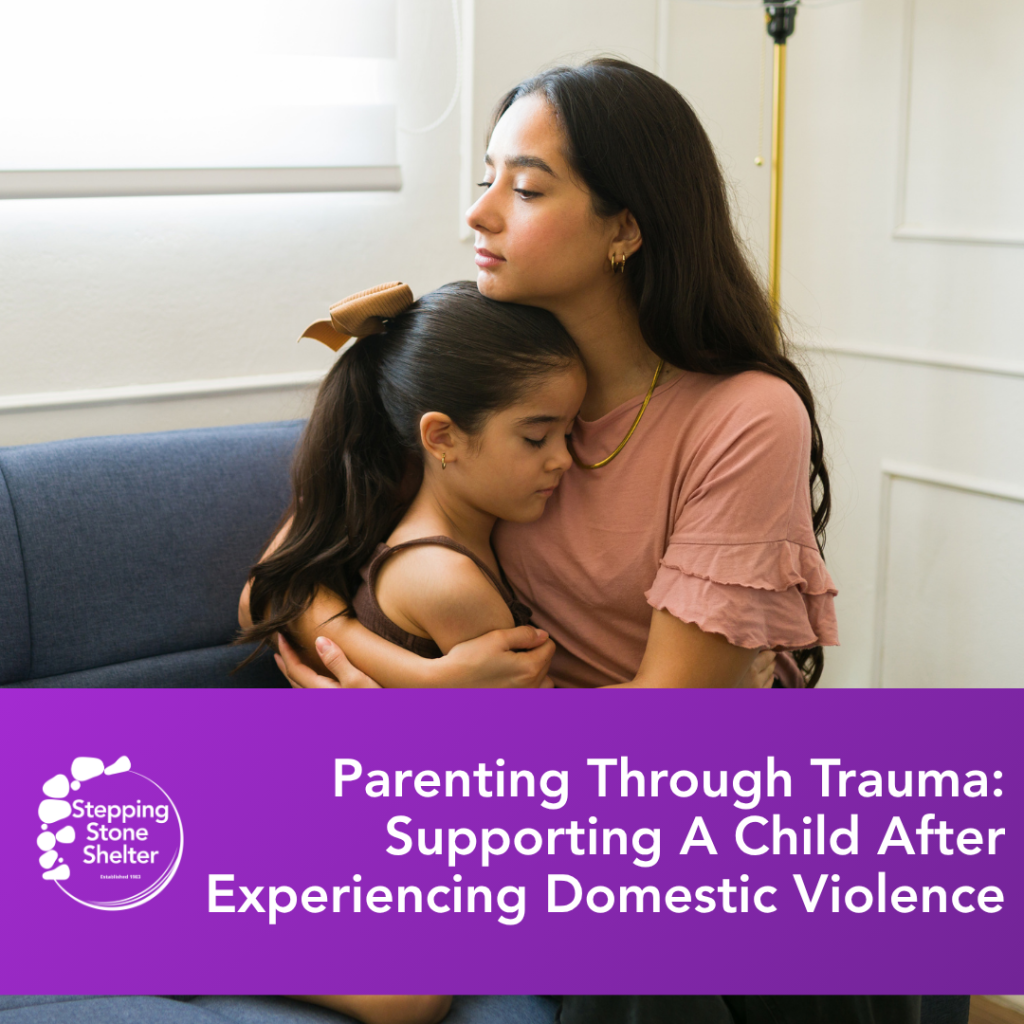
Domestic violence affects the entire family, not just the parties involved. Children experience trauma when they are directly harmed by abuse, but they can also be deeply affected by witnessing violence, hearing threats, or living in an environment where they don’t feel safe. Parenting after experiencing domestic violence can feel overwhelming.
Individuals might struggle with what to say, whether they should say anything, how to respond to a child’s change in behavior, or how to help a child feel safe again. They might simply be trying to get through the day while processing their own experience.
What Is Trauma In Children?
The National Center for Biotechnology Information defines trauma in children as, “…exposure to actual or threatened death, serious injury, or sexual violence…In children, motor vehicle accidents, bullying, terrorism, exposure to war, child maltreatment (physical, sexual, and emotional abuse; neglect), and exposure to domestic and community violence are common types of childhood traumas that result in distress, posttraumatic stress disorder (PTSD), and posttraumatic stress symptoms (PTSS).”
What Effect Does Trauma Have On Children?
Children who experience trauma from domestic violence may develop PTSD and PTSS. Trauma also alters brain development and causes distress. This can lead to behavioral changes, hypervigilance, a weakened immune system from chronic stress, trouble identifying and/or expressing emotions, changes in school performance, and regression, in which young children may return to age-inappropriate behaviors, such as bedwetting, separation anxiety, thumb-sucking, and other similar behaviors.
How To Help A Child Feel Safe
Helping your child heal after experiencing domestic violence may be hard, especially when attempting to process your own experience. However, knowing how to help your child process and regulate is a huge step towards creating a sense of safety and beginning to heal.
- Allow space for the child to love both the victim and the perpetrator
- Demonstrate your unconditional positive regard and nonjudgment
- Try practicing mindfulness, breath work, and guided meditation
- Help them tap into their senses: what they see, smell, or touch that helps them feel safe
- Look into art therapy, play therapy, equine-assisted therapy, and eye movement desensitization and reprocessing
- Try co-regulation: using your own calm presence to steady their nervous system
- Deep breathing
- Do not force the child to process the trauma too early; the body needs time to regulate, and the proper support and resources must be available before healing is possible.
Help Is Available
You are not alone. Stepping Stone Shelter is here to help. Whether you need immediate shelter or help in accessing services, like housing, protection orders, etc., we are here to help you. Reach out to us at 219-879-4615. We offer a 24-hour crisis line staffed by our advocates.
Our staff will work 1-on-1 with victims and survivors of domestic violence, intimate partner violence, sexual assault, or other related forms of victimization both in and out of shelter. Advocates are available to assist clients with various needs, including:
- Safety planning
- Basic Needs (Food, Shelter, Clothing, etc.)
- Advocacy
- Assistance navigating the legal system (including protective orders)
- Domestic violence education
- Support
- Help identifying options and resources
- Parenting support/ child advocacy
- Recognizing Healthy Relationships
- Support Systems
- Counseling
- Life Skills Training (employment, education, budgeting, parenting, etc.)
- Access to a computer
- Self-Care, Self-Esteem, and Assertiveness Skills
- Coordination of services with other agencies
You Are Not Alone
Healing after domestic violence is a process, and families may need different types of support along the way. A child may need help processing what they experienced. A parent may need support navigating their own healing, rebuilding confidence, or learning how to move forward after abuse. If you or your child has experienced domestic violence, help is available. Stepping Stone Shelter is here to provide support, resources, and a safe, judgment-free place to begin moving forward. If you need help, reach out to Stepping Stone Shelter or call our 24-hour hotline at 219-879-4615. You and your children deserve safety.