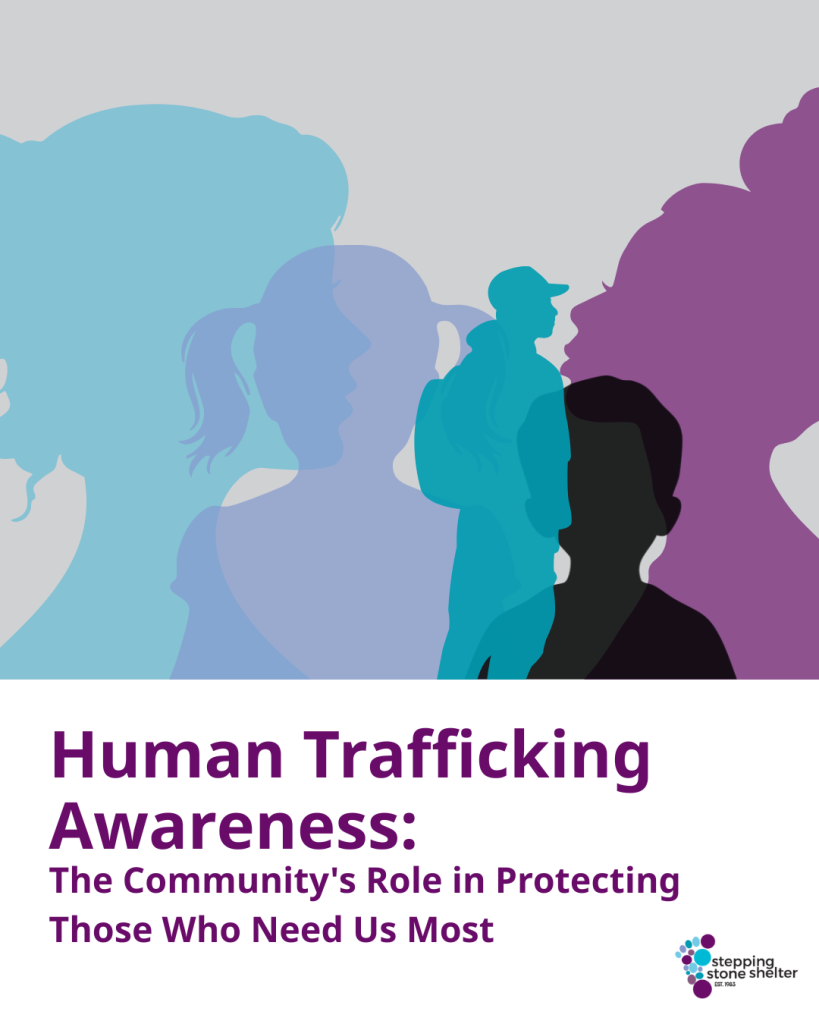
Human Trafficking is one of the most pervasive human rights violations happening right here in our own community. Think it doesn’t happen here, wrong. We witness firsthand how trafficking intersects with domestic violence and sexual violence, right in our community and further afield in our region. The community’s critical awareness and actions create survivors, not potential tragedies.
Understanding the Connection: Prostitution as Human Trafficking
One of the most dangerous misconceptions about human trafficking is that it’s something that happens “somewhere else” in other countries, in big cities, but not here. The reality is far different. Indiana received 293 trafficking signals in 2024. A Trafficking signal is a report of a suspected trafficking situation.
Many individuals engaged in prostitution are not making a “choice” but are victims of human trafficking. They are survivors of domestic violence who were isolated, controlled, and exploited by intimate partners. They are often survivors of childhood sexual abuse whose trauma was weaponized against them. They are mothers desperate to provide for their children, immigrants without legal status or support networks, and young people who were groomed by someone they trusted.
The path from domestic violence to trafficking is tragically common. An abusive partner controls every aspect of a victim’s life, their finances, their identification documents, and their connections to family and friends. When the controlling partner forces or coerces their partner into commercial sex acts, that is human trafficking. When they take the money the individual is forced to earn, that is trafficking. When violence, threats, or psychological manipulation keep the individual trapped, that is trafficking.
Those engaging in prostitution are not criminals. They are survivors who need our compassion, our support, and our commitment to justice.
Recognizing the Warning Signs
Human trafficking hides in plain sight. You might encounter trafficking victims at the gas station, the emergency room, the grocery store, or the hotel where you’re staying. Here are signs that someone may need help:
- Someone who appears fearful, anxious, or submissive, especially around a controlling companion
- Signs of physical abuse, malnourishment, or poor hygiene
- Lack of control over personal identification or money
- Scripted or inconsistent responses when speaking about their situation
- Restricted freedom of movement or communication
- Working excessively long hours in commercial sex, hospitality, or service industries
- A minor engaged in commercial sex under any circumstances (all minors in commercial sex are trafficking victims by law)
In our local context, trafficking often involves individuals being moved between cities for commercial sex, women, men, and children controlled by another person who profits from exploitation, and vulnerable individuals targeted at truck stops, hotels, and online platforms.
How Our Community Can Support Survivors
Supporting trafficking survivors requires all of us to take responsibility. Here’s how you can help:
Educate Yourself and Others: Understanding that prostitution often involves trafficking, coercion, and survival, not choice, is the first step. Share this knowledge with your family, faith community, and social networks.
Support Local Services: Organizations like ours provide emergency shelter, trauma-informed counseling, and long-term support to help survivors rebuild their lives. Your donations, volunteer hours, and community support make this work possible.
Create Employment Opportunities: Survivors need stable employment that offers dignity, flexibility, and understanding. If you’re an employer, consider how your business could provide opportunities.
Speak Up: If you suspect trafficking, trust your instincts. You don’t need to be certain; trained professionals can assess the situation. Your awareness could save a life.
Advocate for Change: Support policies that treat trafficking victims as survivors deserving of services rather than criminals deserving of punishment. Contact your legislators about funding for victim services and trafficking prevention programs.
Challenge Demand: The commercial sex trade exists because of demand. Educate those in your life about consent, respect, and the reality of trafficking.
Taking Action: What to Do If You Suspect Trafficking
If you or someone you know needs help:
National Human Trafficking Hotline: 1-888-373-7888 or text “HELP” to 233733 (24/7, multilingual, confidential support and referrals)
Stepping Stone Shelter Crisis Line: 1-219-879-4615 (24/7 support for domestic violence and trafficking survivors)
Emergency: Call 911 if someone is in immediate danger
When you call, share what you observed without confronting the suspected trafficker. Even small details can help, such as location, vehicle descriptions, physical descriptions, and time of day.
Our Shared Responsibility
Human trafficking thrives in silence and indifference. It persists when we look away, when we judge survivors rather than support them, when we fail to recognize that the person standing in front of us may be fighting for their life.
We invite our community to move beyond awareness to action. Every survivor who walks through our doors reminds us why this work matters. They remind us that behind every statistic is a person who deserves safety, dignity, and the chance to heal.
Together, we can create a community where traffickers find no refuge, where survivors find comprehensive support, and where every person understands their role in ending this violence.
If you’re experiencing trafficking, domestic violence, or sexual assault, please know: this is not your fault, you deserve help, and you are not alone. We believe you, and we’re here for you.