
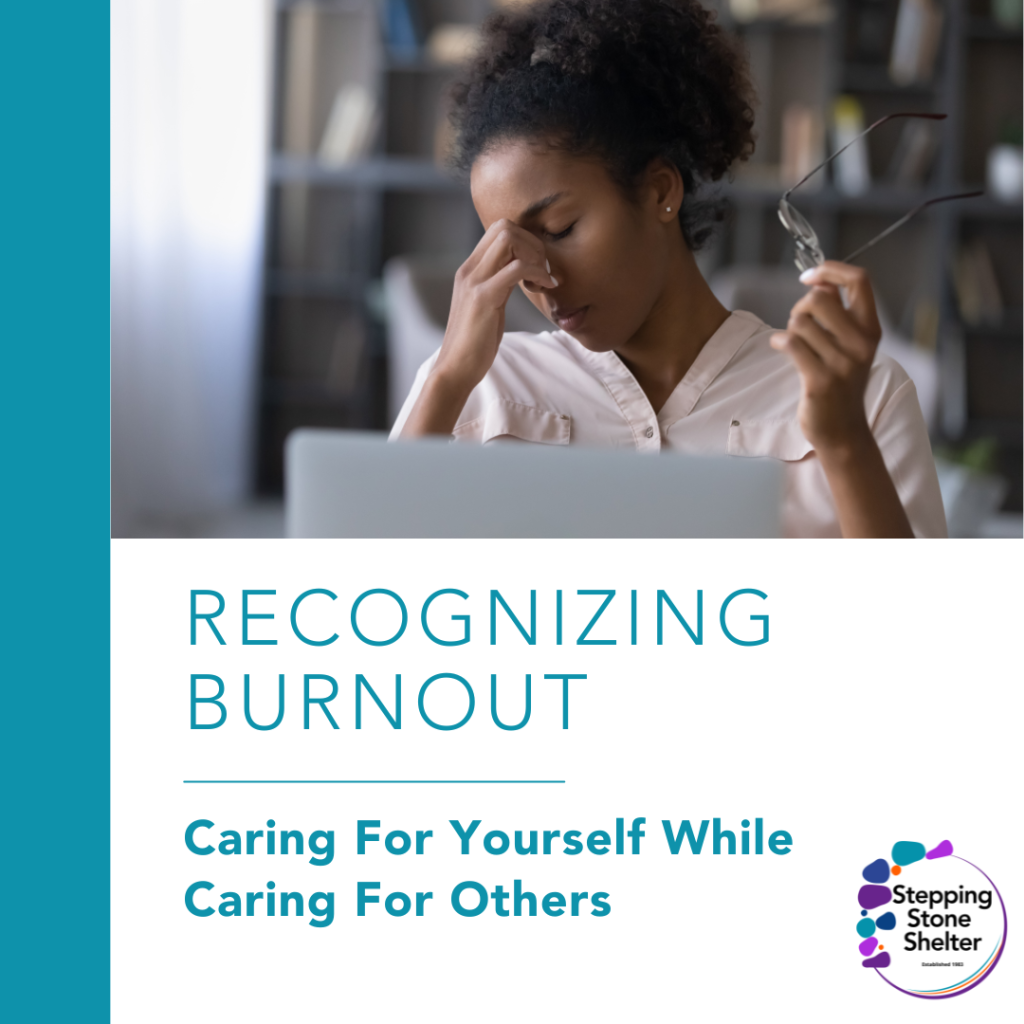
As we recognize PTSD Awareness Month, it’s important to acknowledge the challenges faced by those who work as survivor advocates. The emotional and psychological toll of working in this space can be significant, impacting not only the workers themselves but also the people they serve. While working in this field often feels like a calling rooted in compassion, empathy, and a deep desire to help others heal, it’s important to recognize the signs of burnout and secondary traumatic stress to maintain your own well-being before supporting someone else’s.
Understanding Burnout
Burnout is a state of emotional exhaustion, depersonalization, and feelings of professional insufficiency that develops after prolonged exposure to highly demanding work environments.
Burnout has been associated with a range of physical and mental health issues, decreased productivity, and diminished commitment to one’s organization. It may also impact compassion satisfaction and the positive feelings typically derived from helping others. The lack of both serves as a protective factor against burnout in helping professionals, such as advocates for survivors of domestic violence.
Secondary Traumatic Stress
For professionals in domestic violence services, repeated exposure to stories of abuse, violence, and trauma can sometimes lead to secondary traumatic stress (STS). STS is more severe than burnout and can closely resemble post-traumatic stress disorder. Secondary traumatic stress develops when helping professionals repeatedly witness or hear traumatic experiences through their work. Over time, the emotional weight of these experiences can accumulate and affect an individual’s thoughts, emotions, and physical health.
Symptoms of secondary traumatic stress may include intrusive thoughts about clients’ experiences, difficulty sleeping or recurring nightmares, increased anxiety or fear, feeling constantly on edge or hyperaware of potential dangers, persistent exhaustion or agitation, difficulty concentrating, and emotional numbness or withdrawal.
Some individuals may also experience feelings of guilt, hopelessness, or a desire to avoid situations that remind them of difficult cases. As these symptoms intensify, they can affect an advocate’s ability to engage fully with clients and may reduce the sense of fulfillment they typically derive from helping others.
Protecting Yourself from Burnout
Taking proactive steps can help reduce the impact of burnout and STS.
- Establish clear boundaries between work and personal life: Give yourself time to rest, recharge, and engage in hobbies or activities that bring you joy.
- Prioritize your mental health: Take care of yourself first and foremost. Idolizing those who sacrifice their mental health or well-being creates unsustainable standards.
- Mental health resources: Utilize counseling, therapy, employee assistance programs, and other local resources.
Taking Care Of The Caregivers
Domestic violence survivor advocates are incredibly strong, caring, and dedicated, but even the caretakers need to be taken care of. This PTSD Awareness Month, remember that recognizing burnout and secondary traumatic stress is vital.