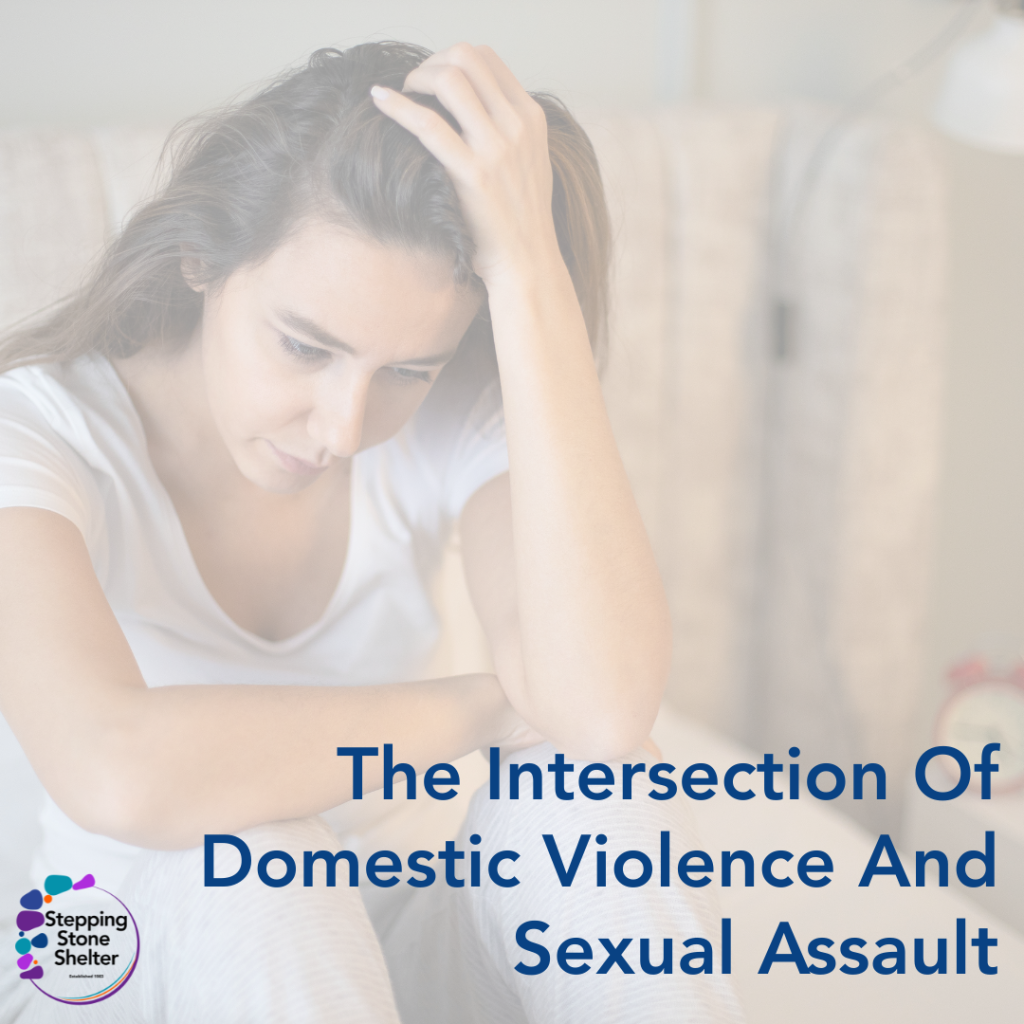
April is Sexual Assault Awareness Month, which means there’s no better time to educate our community about the impact sexual assault can have. At Stepping Stone Shelter, we support survivors of domestic violence, sexual assault, and human trafficking. As we discuss this issue, it’s important to recognize its nuances. One of these complexities is the intersection between domestic violence and sexual assault, which often goes hand-in-hand.
What Is Sexual Assault?
Sexual assault can take many forms, but in very brief words, it is any intimate contact or behavior that occurs without the explicit, freely given consent of the recipient, involving force, coercion, manipulation, or incapacity. This includes, but is not limited to, rape, forced kissing, groping, or touching of intimate body parts, and can be committed by anyone regardless of relationship to the victim.
What Is Domestic Violence?
Domestic violence is a pattern of abusive behavior in any relationship that is used by one partner to gain or maintain power and control over another intimate partner. This can include
- Emotional abuse, such as continual criticism, isolation from family/friends, threats, and humiliation.
- Financial abuse is controlling how money is spent, denying access to bank accounts, sabotaging employment, withholding money for basic needs, and demanding a partner’s public benefits.
- Physical abuse can include pushing, slapping, choking, trapping a partner, reckless driving to frighten, and preventing access to medical help or police.
- Sexual abuse includes forcing unwanted sexual activity, not asking for consent, restricting access to birth control, and sexual humiliation.
How Do They Intersect?
Sexual assault and domestic violence both share a foundation of exerting power or control over a survivor. This can be used to intimidate, control, demean, harm, or ‘trap’ a survivor. Between 40% and 45% of women in abusive relationships will also be sexually assaulted during the course of the relationship, with over half of women being assaulted multiple times by the same partner, according to the National Domestic Violence Hotline.
According to the CDC, approximately one in 10 men in the U.S. experienced sexual violence, physical violence, and/or stalking by an intimate partner during their lifetime. However, it is important to recognize that men are less likely to report sexual abuse due to stigma and rigid stereotypes around masculinity.
Abusers may use intimidation, pressure, threats, blackmail, or physical force to gain sexual control over a survivor. It is also common for abusers to withhold birth control and/or emergency contraceptives to intentionally be impregnated or impregnate a survivor without their consent, which is known as reproductive coercion or reproductive abuse. This is a deliberate tactic used to assert power and control, force a survivor to stay in the relationship, create financial dependency, and/or disrupt their autonomy.
Consent Is Required Every Time
Consent is never implied due to a relationship status. It is a very harmful yet common misconception that sexual assault isn’t possible in a relationship. However, being married or in a relationship with someone does not automatically imply consent, and it is important to know that sexual activity without explicit, freely given consent is sexual assault and/or sexual abuse.
You are never required or obligated to engage in sexual activity with a partner. An abuser or partner can not legally or ethically force, coerce, or pressure another into a sexual act they do not want to perform, even if they have had consensual sex in the past. Assault by a romantic partner is possible and common, with many cases being underreported and dismissed.
Marital Rape/Assault
Marital rape is illegal in all 50 states. However, it can unfortunately be treated differently in some cases, as some states still maintain “loopholes” or exemptions that treat spousal rape differently than non-spousal rape, such as having shorter reporting times or requiring proof of higher force. Being married or in a relationship with someone does not imply consent. Intimate partner sexual assault is, unfortunately, one of the most underreported kinds of sexual assault.
Help Is Available
If you or someone you know is experiencing domestic violence, has been sexually assaulted, or is experiencing sexual abuse, help is available. At Stepping Stone Shelter, we offer 24-hour emergency shelter & transitional housing, assistance in filing charges with law enforcement, support during medical exams, support in filing a protective order, emotional support & coping strategies addressing immediate needs, creating a safety plan, accompaniment during legal proceedings, and education for family and friends on domestic/intimate partner violence.
You are not alone. You can call our 24-hour crisis line at 219-879-4615 or visit our website here.