Domestic violence is a complex and widespread issue that affects many different people. Although the movement for change has gained awareness in recent decades, it wasn’t always this way. Domestic violence has often been overlooked or normalized throughout history. Legal protection for survivors was minimal, and abuse inside the home was rarely addressed by authorities.
This is why the domestic violence movement, speaking out against injustice, and advocacy are so important. There are still a few misconceptions about what domestic violence is, who it affects, and what it can look like. This blog is dedicated to educating readers on the realities of abuse, the history of the movement, and ways to support survivors.
What Is Domestic Violence?
Domestic violence is the use of power and control within an intimate relationship that threatens a person’s well-being. This abuse can be physical, sexual, emotional, or financial. It can happen to anyone of any race, gender, age, sexual orientation, or religion. It can happen to couples who are married, living together, or dating. Domestic violence affects people of all socio-economic backgrounds and education levels.
Although physical violence is often the first thing people think of, abuse can take many forms. Emotional abuse may involve manipulation, intimidation, humiliation, or criticism. Financial abuse can include controlling someone’s money, preventing them from working, or creating debt in their name. Sexual abuse involves non-consensual sexual activity or coercion.
Over time, abuse can escalate, which leaves survivors feeling isolated, scared, or unable to leave safely. Being able to recognize these patterns is an important step in supporting survivors of domestic violence.
History Of The Domestic Violence Movement
Domestic violence, unfortunately, has been widely overlooked, ignored, or normalized throughout history. Until the 19th century, there were no consistently applied consequences for those who physically abused their partners. Advocacy for change grew during the 19th century, when early reformers challenged the idea that violence in the home should be tolerated.
The 19th Century
- In the 1870s, reformers began publicly addressing abuse in the home. Organizations like the Women’s Christian Temperance Union were formed due to the connection between high rates of domestic violence and excessive alcohol consumption, and pushed for social reforms.
- In 1871, early legal steps were taken when states such as Alabama and Massachusetts criminalized assaults by husbands against their wives.
- In 1874, North Carolina and Maryland followed suit in criminalizing domestic violence. New York begins hearing cases against marital rape.
The 20th Century
- Progress continued in 1945, when marital rape was outlawed throughout the entire US.
- In 1972, the first emergency rape crisis hotline opened in Washington, D.C.
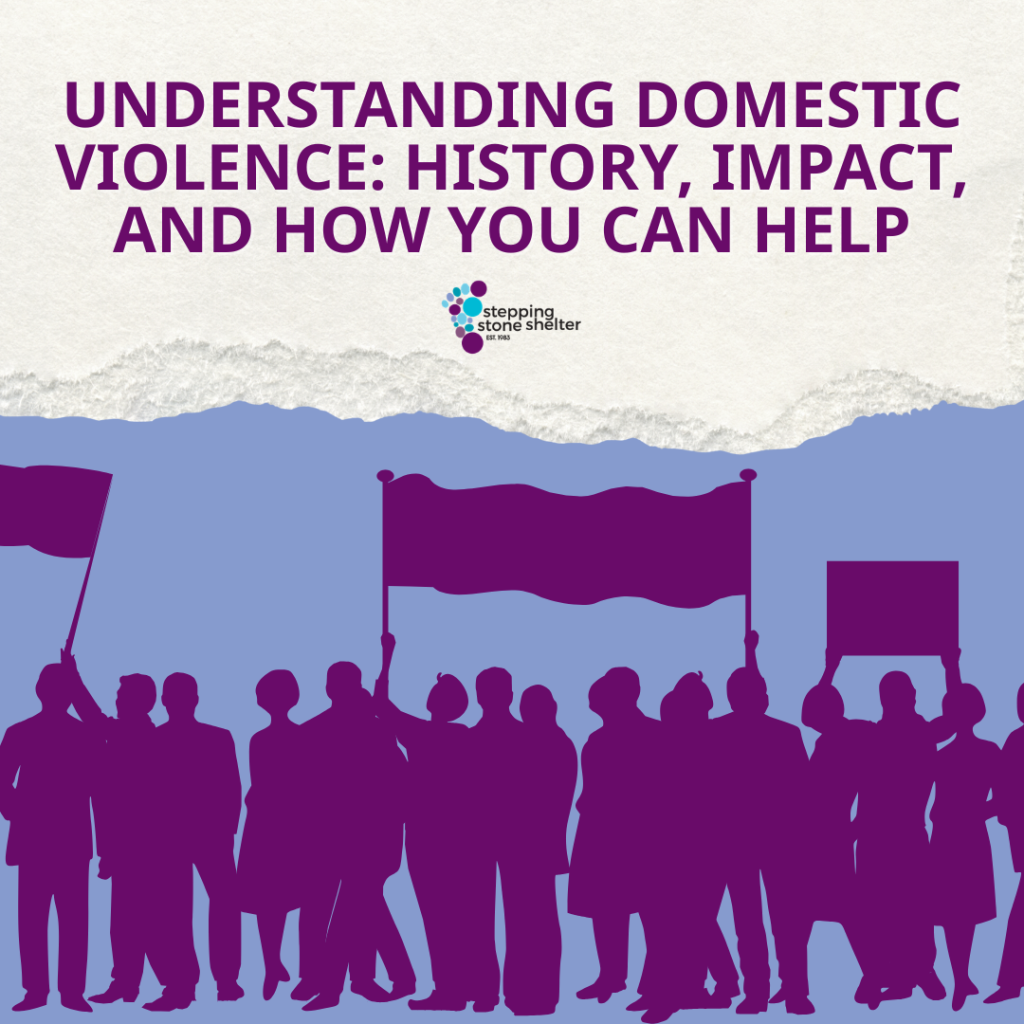
- In the early 1970s, the Battered Women’s Movement began, led by feminist activists and survivors, bringing national attention to this issue and pushing for systemic change.
- In 1974, the first permanent domestic violence shelter in the U.S. was established, giving survivors resources that previously did not exist.
- In 1977, the Boston Hospital created a holistic trauma response for identifying and treating survivors of domestic violence. Connections for Abused Women and their Children, the first domestic violence program in Chicago, establishes the first-ever domestic violence hotline.
- In 1978, the National Coalition Against Domestic Violence (NCADV) was formed.
- In 1979, CAWC opened the Greenhouse Shelter, Chicago’s first shelter for battered women and their children.
- In the early 1980s, the Domestic Abuse Intervention Programs in Duluth, Minnesota, was founded, over 700 domestic abuse shelters were operating in the U.S., and President Ronald Reagan signed the Victims of Crime Act (VOCA) into law. This established the Crime Victims Fund, which is used to compensate survivors for costs incurred in recovering from crime.
- In 1985, the Thurman law was established after Tracey Thurman won a lawsuit that led to the creation of the Family Violence Prevention and Response Act. This law requires police to make arrests in domestic violence cases.
- In 1989, October was officially designated as National Domestic Violence Awareness Month.
- In 1992, the CAWC founded the Hospital Crisis Intervention Project.
- In 1994, Congress passed the Violence Against Women Act (VAWA) to prevent gender-based violence, including domestic violence, sexual assault, and stalking, and to offer various services to survivors.
The 21st Century
- In 2000, the Sexual Assault Reform Act was passed in New York, imposing stringent residential restrictions on convicted offenders of certain sexual offenses, and the CAWC opened the Humboldt Park Outreach Program.
- In 2009, Vice President Biden appointed Lynn Rosenthal as the White House Advisor on violence against women.
- In 2017, the Me Too movement gained traction on social media as prominent cases of sexual violence against women were brought to light.
- In 2019, the VAWA was reauthorized and closed the “boyfriend loophole” by prohibiting individuals convicted of misdemeanor crimes of domestic violence against dating partners from purchasing or possessing firearms. This updated the previous law, which only restricted spouses or cohabitating partners.
- In 2022, the most recent Violence Against Women Act Reauthorization Act was signed.
Why Awareness Still Matters
Despite decades of advocacy and progress, domestic violence is still a major issue, and a story that belongs to all of us. Plenty of survivors still face barriers when seeking help. Some of these barriers include fear, financial dependence, lack of resources, and social stigma.
Advocating for survivors and raising awareness about domestic violence helps break down these barriers. When we talk openly about abuse, survivors feel less alone and more empowered to talk. Raising awareness helps people recognize red flags in their own relationships or in the lives of friends and family members.
Moving Toward A Safer Future
Thanks to the work of survivors, advocates, and activists, millions of survivors now have access to resources and support. However, the work is far from complete. When we continue to educate ourselves and others, support survivors, and challenge harmful behaviors, we can create spaces where everyone feels safe. This issue is not the responsibility of survivors alone; it belongs to all of us.