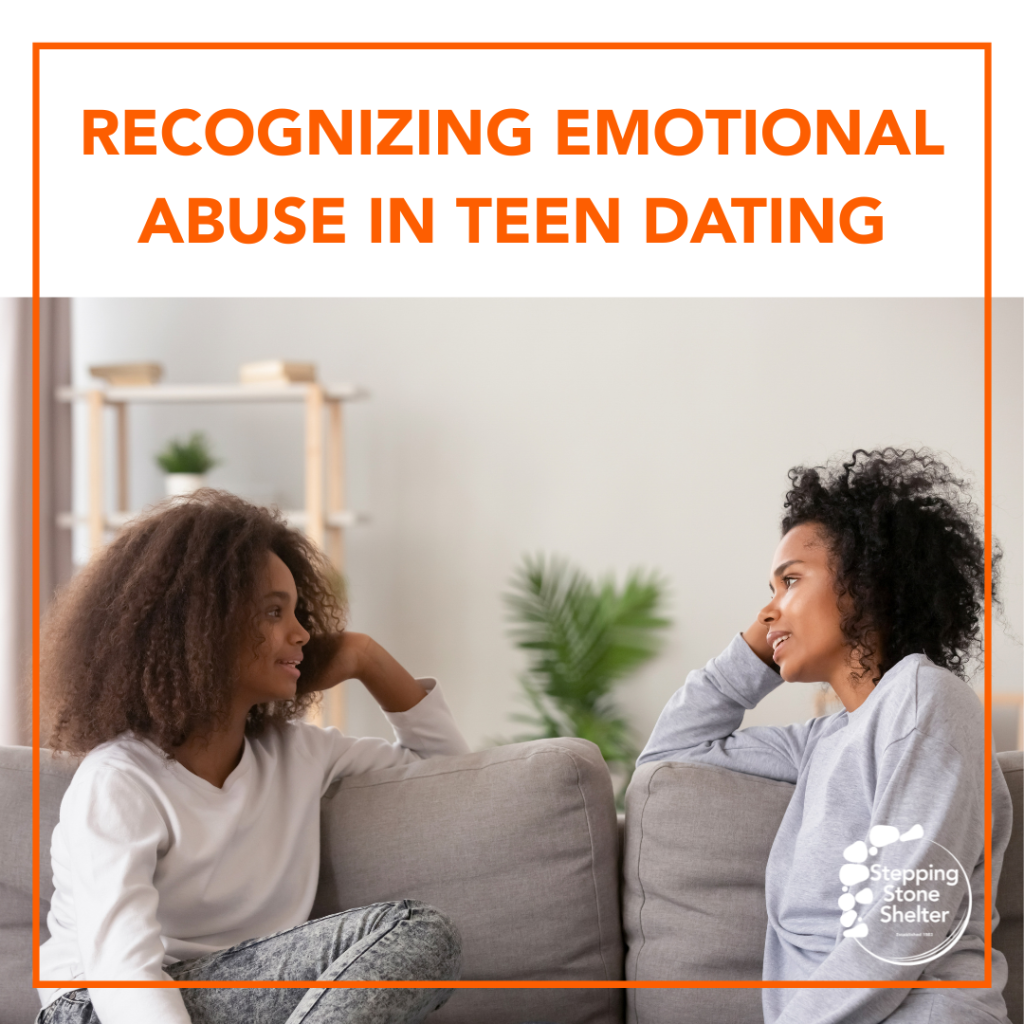
Abuse can affect any person of any age range. When it comes to teen dating violence, most people think of physical abuse. The truth is that dating violence can take many forms. Other forms of abuse can be just as harmful, especially for teenagers who are still learning to recognize a healthy relationship. Emotional abuse often gets mistaken for typical relationship challenges. Recognizing the warning signs can help parents, caregivers, educators, and trusted adults intervene early and support healthy relationships.
What Is Emotional Abuse?
Emotional abuse can be continual criticism, isolation from family/friends, threats, and humiliation. This may start small and become more severe over time in any relationship. Emotional abuse is about gaining power and control. Survivors may begin to question their self-worth, feel isolated, or believe they are responsible for their partner’s behavior.
Recognizing Emotional Abuse
It is important for your teen to recognize the signs of emotional abuse so they can identify when to seek support. Emotional abuse doesn’t always look the same, but there are a few things to look out for:
- Extreme jealousy
- Isolation from friends and family
- Threats and intimidation
- Constant criticism or insulting them
- Name-calling or making jokes at their expense
- Embarrassing or humiliating a survivor in front of others
- Accusing the survivor of cheating without reason
- Demanding access to their phone, passwords, or social media accounts
- Blaming the survivor for their actions
- Ignoring, punishing, or giving the “silent treatment”
You should never ignore repeated patterns of these behaviors.
What Emotional Abuse Might Look Like Online
Social media has changed the way teens communicate and have relationships, and emotional abuse can occur online in addition to in person. Emotional abuse online might look like:
- Demanding or constantly tracking their location
- Expecting instant replies to messages or answers to phone calls, and getting upset with the survivor if they don’t respond to them
- Forcing them to share passwords to social media accounts
- Monitoring their social media
- Threatening to share intimate messages or photographs
- Posting embarrassing content without permission
- Sending repeated messages or calling to guilt, pressure, or intimidate
These behaviors are often dismissed or even romanticized by teens who don’t understand what a healthy relationship looks like, and it is important to intervene before the behavior escalates and becomes harmful to your teen.
Your Teen Deserves To Be Respected
Healthy relationships are built on respect, communication, trust, and love, not surveillance, control, and intimidation. It is important to talk with your teen about the warning signs of emotional abuse and unhealthy behaviors before they become dangerous. If a relationship is causing fear, constant stress, or feelings of worthlessness, it is not healthy. Teaching teens what emotional abuse looks like helps them recognize unhealthy behaviors, seek support, and build good relationships.
Join us for our next Community Conversation on Teen Dating Violence on Thursday, August 6th, at 6:00 p.m. at HealthLinc in Michigan City. This free event offers parents, caregivers, educators, and community members valuable tools to help teens build healthy relationships, recognize unhealthy behaviors, and create a future where every young person knows they deserve respect.