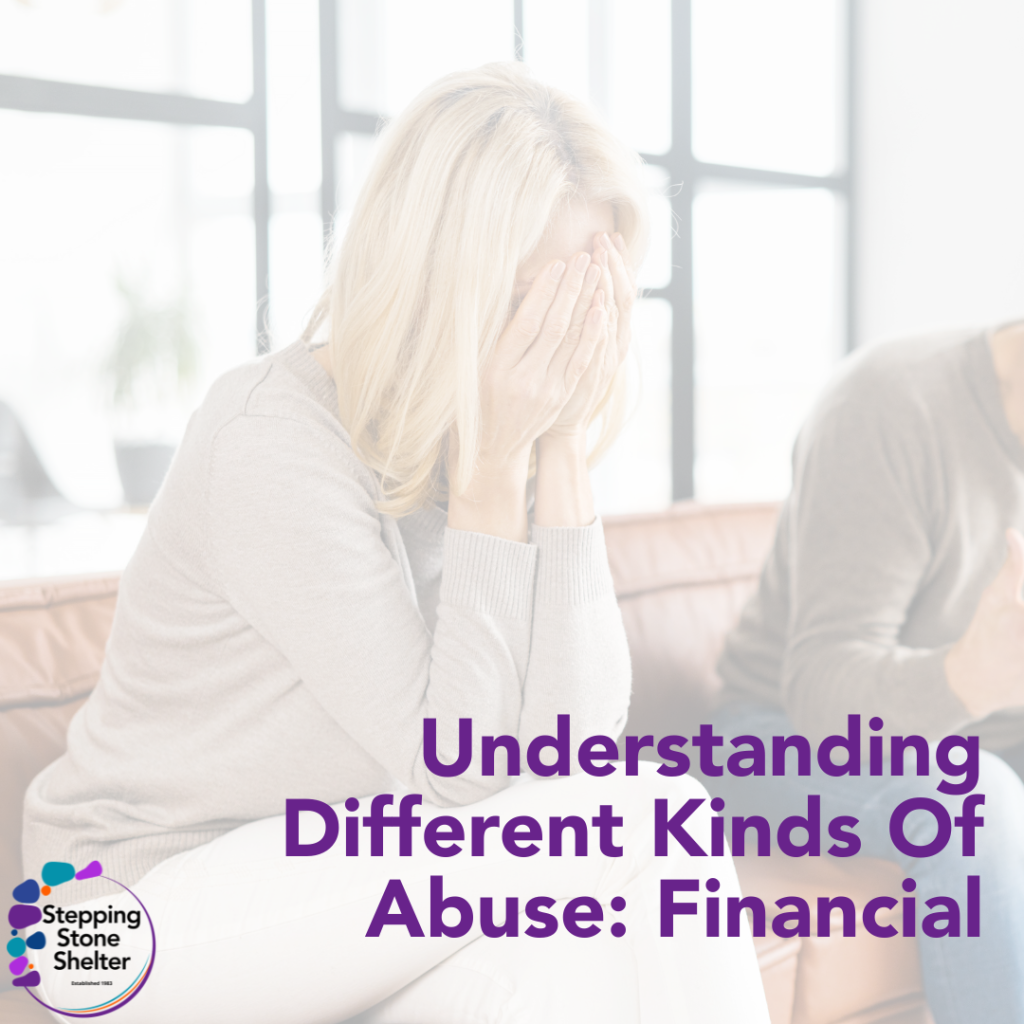
Although physical harm is usually the first thing that comes to mind when people think of abuse, there are many forms of domestic violence. Despite some forms being less visible, they can be just as damaging. Financial abuse is a highly underrecognized type of abuse, but it plays a harmful role in trapping and controlling survivors in violent situations.
What Is Financial Abuse?
Financial abuse involves controlling how money is spent, denying access to bank accounts, sabotaging employment, withholding money for basic needs, and demanding a partner’s public benefits. It is used in order to gain power and/or control over another individual.
Unlike other forms of abuse, financial abuse is harder to see, but equally as devastating. Although there aren’t visible injuries, the impact is long-lasting and destabilizing for survivors. They may feel as if they have no way out without access to money or financial independence.
Signs Of Financial Abuse
There are many different forms of financial abuse. Some common signs include:
- An individual closely monitoring or restricting how money is spent
- Denying access to shared or personal bank accounts
- A survivor has to ask for money for basic necessities such as food, gas, or hygiene products
- An individual intentionally sabotages employment by causing missed shifts or creating conflict at work
- Preventing another individual from getting a job
- Forcing a survivor to hand over paychecks, benefits, or financial assets
- Having debt taken out in a survivor’s name without their knowledge
Why Financial Abuse Is So Harmful
Financial abuse isn’t just about money; it’s about gaining control, power, and isolating a survivor. It is a deliberate pattern of behavior used to gain power and maintain control over another person. When an individual controls another person’s financial resources, they control their ability to seek help, leave, and meet basic needs. Over time, these behaviors create dependence on the abuser and limit a person’s ability to make independent choices for their life.
This form of abuse can sometimes lead to housing instability, damaged credit, lack of access to healthcare, and economic hardship. It can also affect mental health. Survivors may have anxiety, depression, or feelings of helplessness when experiencing financial abuse. For many, it can be one of the biggest barriers to leaving an unsafe relationship, as the risk of starting over can be overwhelming.
How We Can Help Support Survivors
No one should have to face abuse alone. At Stepping Stone Shelter, we provide comprehensive, compassionate support to survivors experiencing financial abuse and other forms of domestic violence. We offer 24-hour emergency shelter and transitional housing for those in immediate danger or in need of a safe place to rebuild. Our team conducts immediate needs assessments and safety planning to help survivors navigate their next steps with clarity and confidence.
We also assist with filing charges and obtaining protective orders, helping individuals understand their rights and options. Legal processes can feel overwhelming, which is why we offer accompaniment during court proceedings. Survivors never have to walk into those spaces alone.
Emotional healing is just as important as physical safety. We provide ongoing emotional support and coping strategies to help survivors process their experiences and regain a sense of control over their lives.
We also believe in the power of community education. By offering resources and guidance to family members and friends, we help build stronger support systems around survivors. When loved ones understand the signs of abuse, they are better equipped to respond with empathy and action.
Have The Conversation
Financial abuse thrives in silence, and it is not always apparent or easy to spot at first. The more we have open conversations about it, the more we diminish its control over survivors. Recognizing the signs, asking questions, and sharing information can make a life-changing difference. Understanding the different types of abuse can be a powerful tool in supporting survivors and taking bigger steps toward prevention.