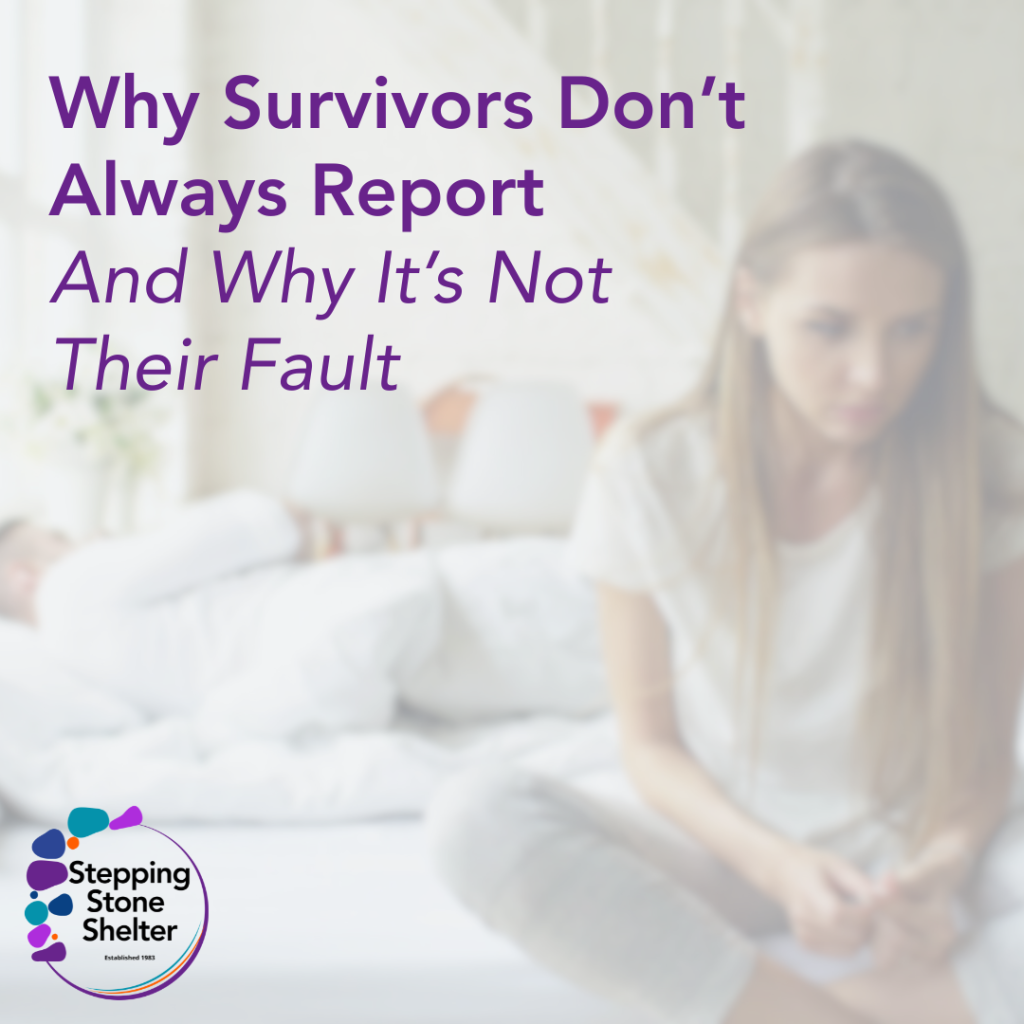
As we make our way through Sexual Assault Awareness Month, one of our main focuses is educating the community about the complexities surrounding sexual assault. One of these complexities is the question that non-survivors may ask: “Well, why didn’t you just report it?” “Why didn’t you tell someone?” “Did you call the police?”
While it may come from a place of well-meaning or an attempt to be supportive, it’s important to remember that this is a nuanced topic, and if a survivor has built up the courage to tell someone, do not make remarks that place blame on them. There are many reasons a survivor may choose or unwillingly choose not to report an assault.
A Survivor Is Afraid
One of the most common reasons for a survivor not to report their assault is fear. There are a few things they may be afraid of, although reasoning may vary depending on the situation:
Fear Of Retaliation
In simple terms, fear of retaliation is the apprehension that reporting a sexual assault will lead to negative actions from the perpetrator. A survivor may avoid reporting or telling someone entirely due to fear of threats, violence, or rumors spread by the assaulter. This fear can stem from the risk of being socially isolated, physically harmed, losing one’s job, or facing damage to one’s reputation; all factors that often prevent victims from coming forward. Retaliation is often used to intimidate victims into silence, discredit them, or maintain power.
Fear Of Judgment
A survivor may also fear judgment by their peers, coworkers, friends, family, or others. Many survivors feel ashamed about their assault and fear what others may think of them if they report it. It’s always best to listen without judgment if a survivor comes to you with their story.
Fear Of Consequences
Many survivors fear social ostracization from their peers, among other consequences. For example, in the workplace, survivors often fear losing a job, demotion, negative evaluations, or being excluded from professional opportunities after reporting sexual harassment or assault. Some survivors, like minors, may avoid reporting due to fear of consequences of their actions, such as underage drinking at the time of the assault.
They Didn’t Realize It Was Assault
Because of harmful myths and limited education around consent, some survivors don’t initially identify their experience as sexual assault. If there was no physical force, or if the perpetrator was someone they trusted, it can be especially confusing for some survivors.
This is part of the reason why some people may not even realize what happened to them was assault. It may take a few hours, days, weeks, or months to process. It may even take another person coming forward with a similar story, or a supportive friend telling them that wasn’t okay.
Assault can look like a perpetrator aggressively attacking someone, but it can also look like persuasion or pressure until they eventually agree. It might look like a random stranger assaulting a survivor, but it might also look like a romantic partner whom you previously consented to. Many survivors avoid telling anyone because they don’t know if the incident was ‘serious’ enough to report.
According to the National Library of Medicine, survivors are more likely to report when their assault reflects stereotypical characteristics of rape, such as an unknown assailant, physical force, and survivor injury; conversely, survivors are generally less likely to report their assaults when the assailant is known to the survivor or when the survivor was assaulted while incapacitated due to drugs or alcohol.
A lot of times, the survivor may not even register the situation as an assault, and for this reason, they don’t report what happened to them.
Trauma And Post-Traumatic Stress Disorder
After an assault, the brain and body can respond in ways that make processing the experience difficult. Survivors may experience dissociation, derealization, or a sense of disbelief. These are natural trauma responses, but they can make it harder to clearly understand or articulate what happened. They may also avoid reporting because they fear the trauma of recounting the assault.
The reporting process itself can feel intimidating and retraumatizing. Survivors may fear having to repeatedly relive their experience, being questioned in ways that feel invasive, or not being taken seriously.
Disbelief & Lack Of Faith In The Justice System
Because of the stigma surrounding sexual assault, many survivors avoid reporting due to fear of disbelief. Survivors may not want others to know about the assault, want to handle it themselves, or fear being blamed or disbelieved by police, lawyers, and others involved in the criminal legal system. Some also avoid reporting because they don’t know if the incident was ‘serious’ enough to report. Along with disbelief comes the fear that legal systems, schools, military units, or others may side with the assailant. Many survivors don’t report because they fear they will be in a worse situation than if they didn’t report.
Self-Blame
Self-blame is a common and deeply painful experience for many survivors. They may question their own choices, actions, or behaviors leading up to the assault. This internalized guilt can make survivors feel responsible for what happened, even though the responsibility always lies with the perpetrator. These feelings can create an additional barrier to speaking out.
A Desire To Move Forward
Some survivors just want to put it out of their heads as fast as possible and move on. Reporting often requires recounting the assault multiple times, facing invasive questions, and potentially encountering the perpetrator again. The emotional toll of this process can feel overwhelming, leading many to choose a more private path toward recovery.
Lack Of Resources & Education
Up until the mid-2000s, survivors were unable to access post-assault forensic care without reporting. In many cases, police were responsible for authorizing Sexual Assault Evidence Kits, which meant that survivors who didn’t report their assault or were deemed ‘uncooperative’ were unable to access those services. This didn’t change until 2005, with the reauthorization of the Violence Against Women Act.
With the passing of the Violence Against Women Act, this now mandates that survivors have access to not only sexual assault evidence kits, but medical forensic exams as well, regardless of whether they choose to report or not. In fact, the National Library of Medicine found that 20-25% of survivors who have a SAEK collected do not report their assault to police at that time and choose instead to preserve evidence in case they decide to take legal action later. This allows survivors to keep their options open while prioritizing their immediate safety.
Why the Responsibility Is Never on the Survivor
There is no “right” way for a survivor to respond to sexual assault. Every survivor’s situation, safety, and healing process is different. The decision not to report is never a sign of weakness or wrongdoing, but is often a reflection of the very real barriers and fears survivors face.
Responsibility always lies with the person who caused harm. By understanding the many reasons survivors may not report, we can begin to replace judgment with empathy, create safer environments for disclosure, and support survivors in whatever choices they make for themselves.